Discover Letojanni and the surrounding area of Taormina
Surroundings
Adventure Park Etna
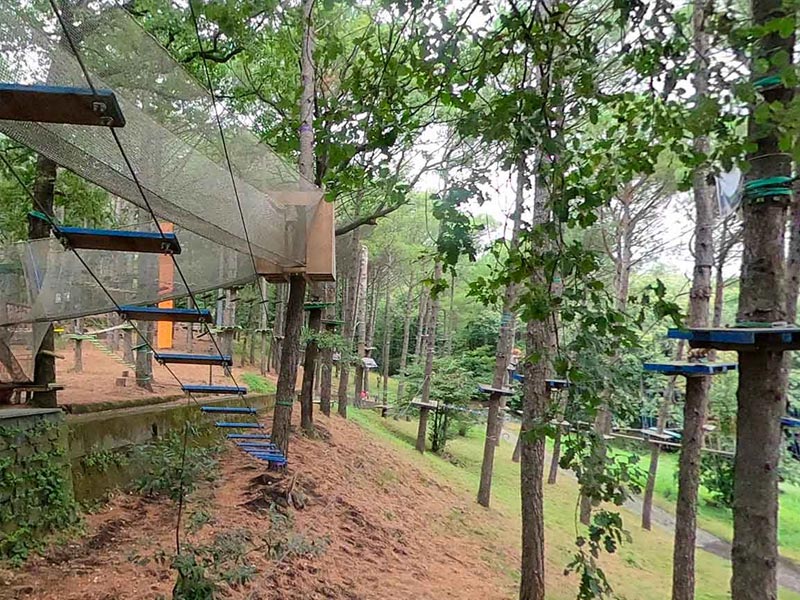
The Etna Adventure Park is the largest adventure park in Southern Italy, with 15 real courses, excluding the various individual attractions such as Top Climbing, the Boulder, the test areas, etc. All courses are equipped with a continuous lifeline or Clic-it smart carabiners, the only smart carabiners to be considered a continuous lifeline according to the new regulations on adventure parks.
41 minutes
38,3km
Etnaland
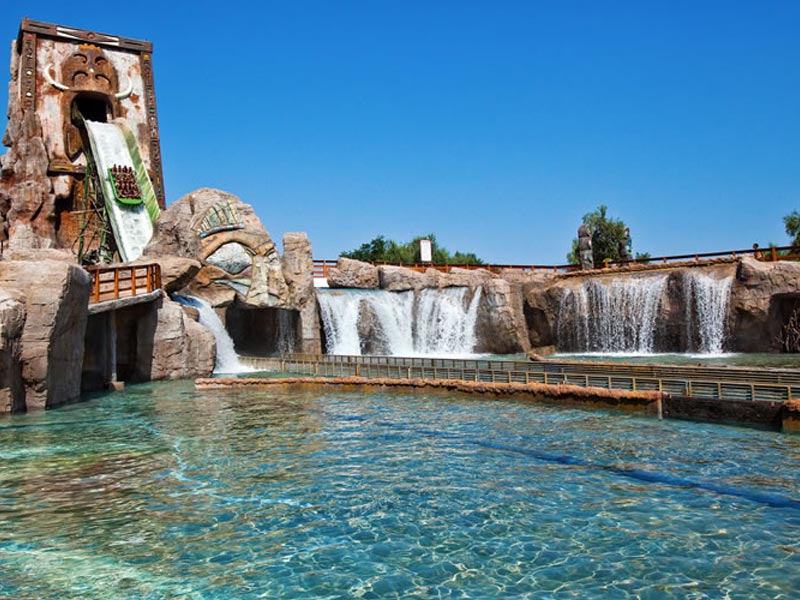
Etnaland, Sicily's amusement park, is located at the foot of Mount Etna, a UNESCO World Heritage Site, just a short distance from Catania. Over time, the park has evolved its recreational offerings, offering guests increasingly exciting experiences.
58 minutes
67,8km
Taormina
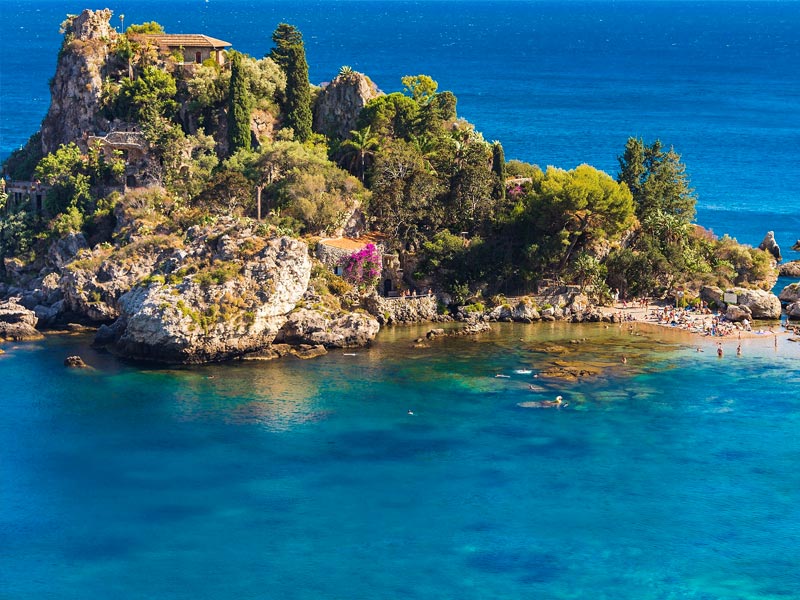
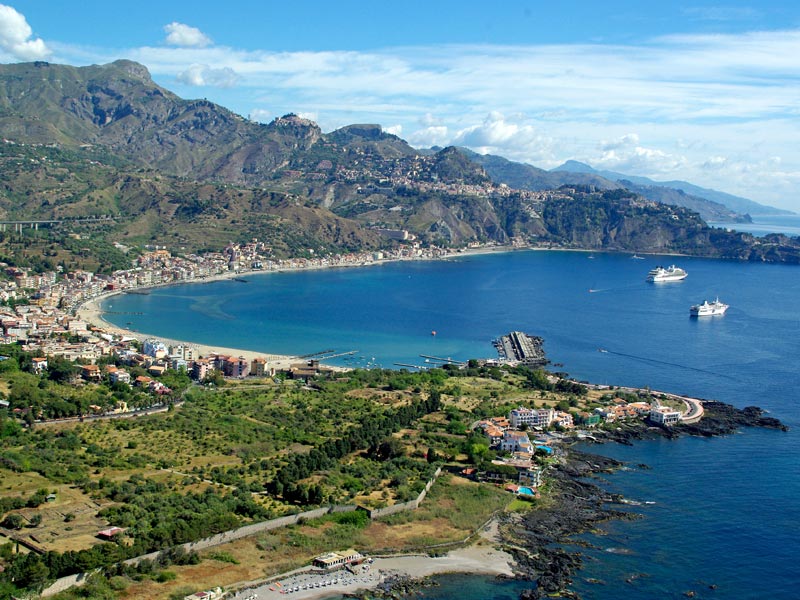
Taormina is a highly sought-after and internationally renowned destination. It is undoubtedly the most famous and visited Sicilian town in the world thanks to its perfect blend of landscapes, sea, and history. Like Giardini Naxos, it is one of the oldest Greek colonies, which is why Taormina boasts some of the most important historical monuments, such as the Ancient Greek Theater, which hosts various cultural and musical events during the summer, the "Corvaja" Palace, and the Taormina Cathedral.
18 minutes
8,7km
Savoca
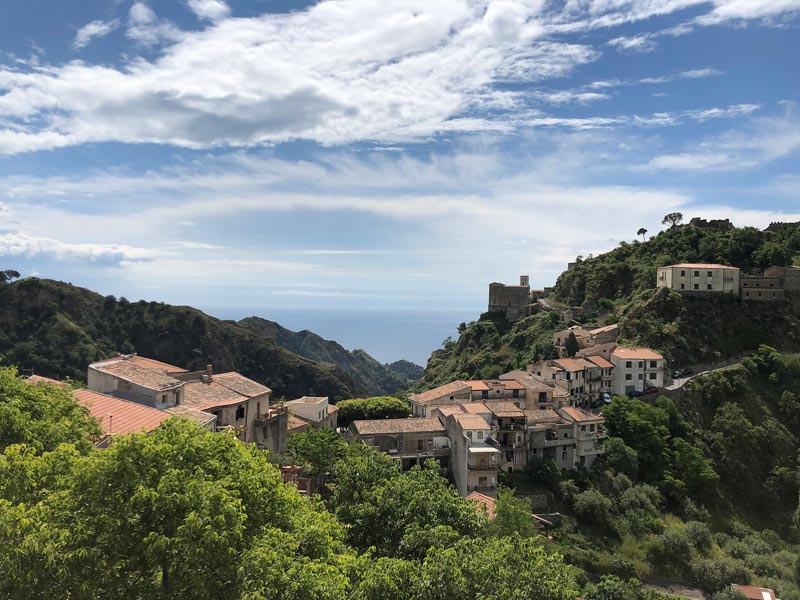
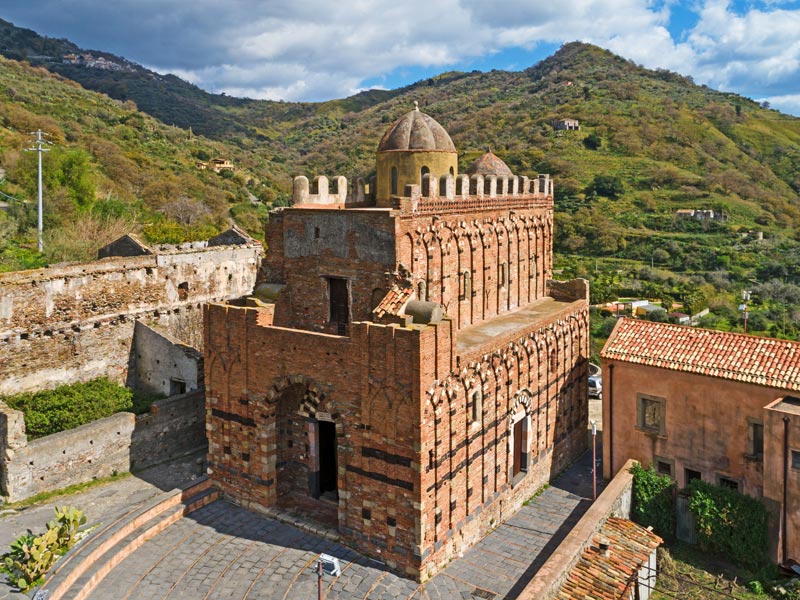
Continuing on state road 114 to Santa Teresa di Riva, you reach a crossroads that leads to Savoca, a charming village at 303 meters above sea level, an ancient and important religious center, as evidenced by the presence of numerous 15th-century churches.
The splendid Church of the Capuchin Convent houses numerous 16th- and 17th-century paintings, including a "Last Supper" by the school of Caravaggio. In the crypt, elegantly dressed and mummified, lie the bodies of 17 illustrious men of the town.
25 minutes
13km
Sant'Alessio Siculo
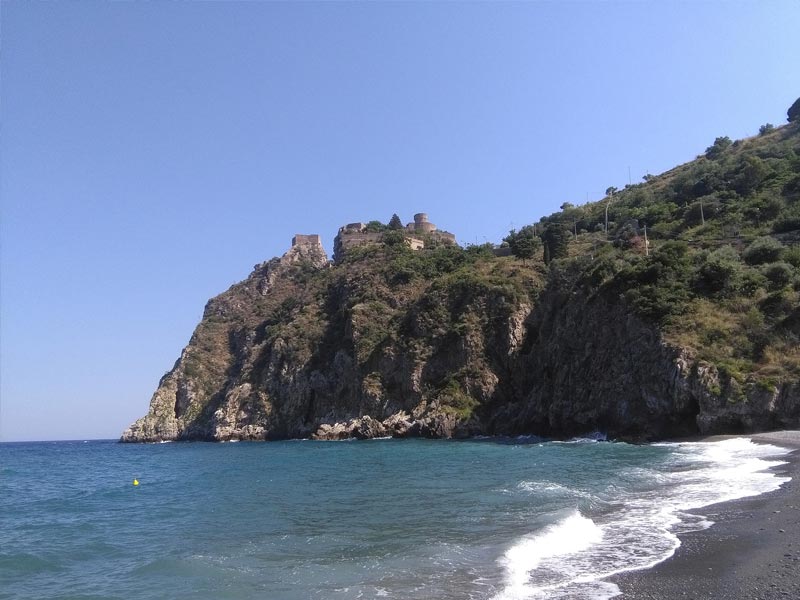
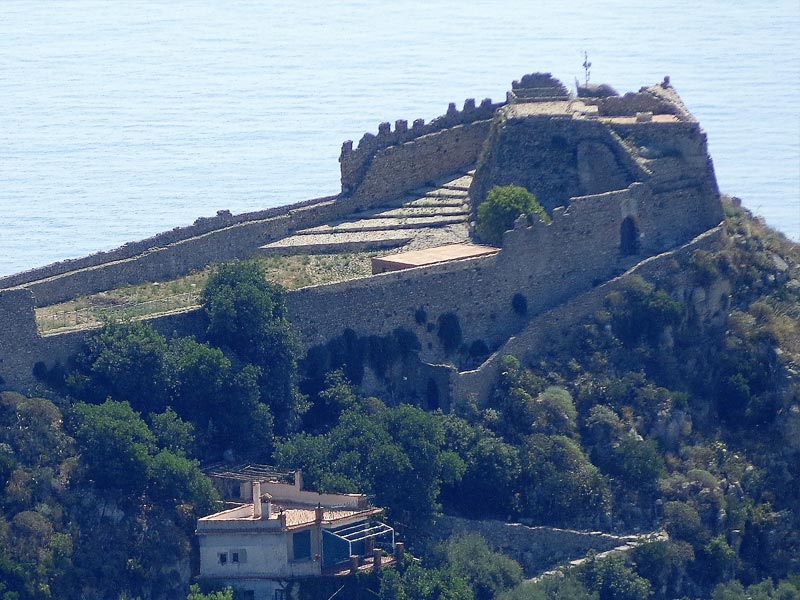
Its cape, characterized by a two-peaked promontory with a circular castle on the first and a medieval fortification on the second, is located on the promontory.
The castle's construction can be dated to a broad period between the 10th century and the end of the 14th century AD. It is not known for certain who built it, but the original structure likely dates back to the Arab period.
Currently, it is accessed via an external staircase flanked by the city walls and consists of the building itself and two towers, one for observation and the other that probably served as a prison.
9 minutes
6km
Fiumefreddo Nature Reserve
Head towards the town of Fiumefreddo di Sicilia by train on the Catania-Messina line, arriving at the local station; or by car from the SS.114 ME-CT at Diana, then take the provincial road to Marina di Cottone. After 1,500 meters, approximately 200 meters from the sea, you'll find the main entrance and the reserve's visitor center.
It's possible to hike the nature trail, which is approximately 3 km long there and back. The route is on flat, dirt roads with no particular difficulty.
The total duration is approximately 90 minutes, including rest and observation periods.
23 minutes
21,1km
Etna Park
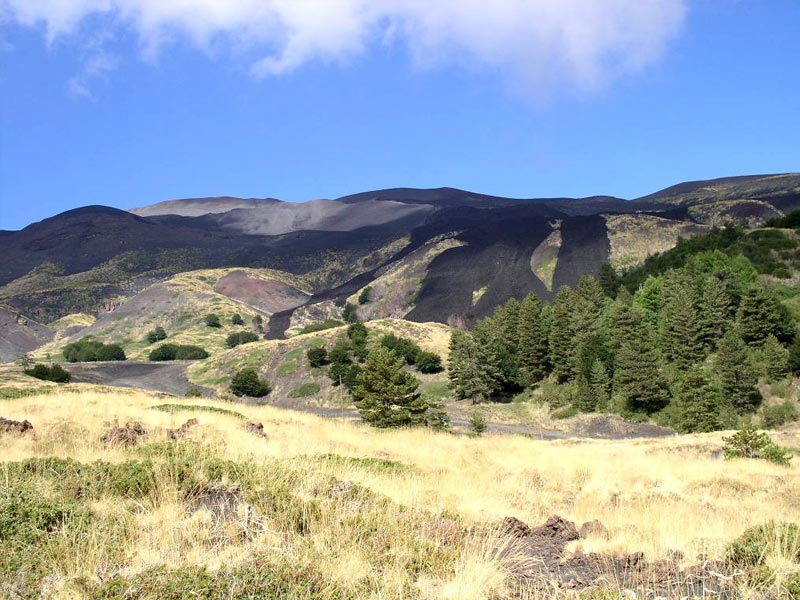
Etna is the highest volcano in Europe and among the most active volcanoes in the world. Its eruptions, which occur both at the summit and on its flanks, can last for a long time, with sporadic interruptions. Due to its constant activity, Etna is one of the most evocative and captivating places on the planet. It is no coincidence that in ancient times it was fertile ground for myths and legends.
The Greeks believed it to be the home of Vulcan, god of fire and the Cyclopes; ancient sailors knew it well because it served as their lighthouse. The Arabs were so impressed that they called it "the mountain of mountains," the mountain par excellence.
37 minutes
28,9km
Aeolian Islands
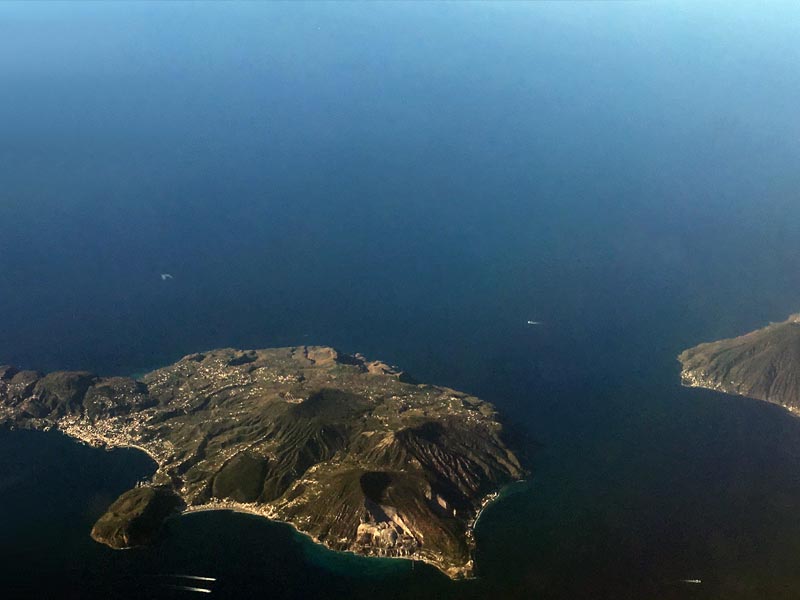
For those who fancy a slightly longer excursion, a visit to the Aeolian Islands is definitely not to be missed, accessible by ferry and hydrofoil from Milazzo or Messina.
In the Aeolian Archipelago, we still find pristine waters from which the "Seven Sisters" emerge, surprising us with their diverse, sometimes wild, nature and colors, the beauty of their coastlines, the wealth of archaeological sites, and their volcanic phenomena.
3 hours and 33 minutes
130km
Alcantara Gorges
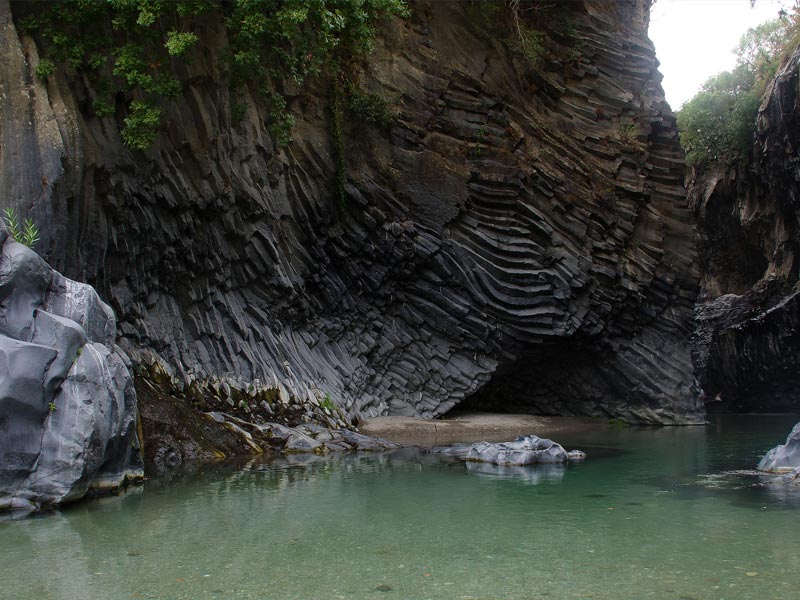
The Alcantara Gorges are a lava canyon, with basalt walls up to 50 meters high, crossed by the Alcantara River and nestled in the wonderful setting of the Alcantara Gorges Botanical and Geological Park, just thirty minutes from the splendid Taormina and near Mount Etna.
The Alcantara Valley and its Botanical and Geological Park offer a unique spectacle, as well as unforgettable experiences and activities that will allow you to discover the natural beauty of an uncontaminated land, in maximum comfort and safety, surrounded by a relaxing and fun atmosphere. You can also enjoy a range of activities such as river trekking and body rafting, with thrilling descents along the crystal-clear waters of the Alcantara River.
34 minutes
23,7km
Giardini Naxos
Naxos, the first Greek colony founded in Sicily in 735 BC, boasts a large archaeological site with an adjoining museum. Few landscapes combine the typical beauty of Sicily like Giardini Naxos, the cradle of ancient Mediterranean civilizations and a pioneering tourist destination in southern Italy.
Halfway between Messina and Catania, Giardini Naxos can be reached in just under an hour from Fontanarossa Airport. From here, excursions are possible to Taormina (just 5 kilometers away), Syracuse, Agrigento, Palermo, the Aeolian Islands, Mount Etna, the Linguaglossa pine forest (an enchanting and unique sea-snow itinerary), and the Alcantara Valley with its evocative gorges.
15 minutes
11,5km
Francavilla
Continuing from the Alcantara Gorges on the SS185, you can reach Francavilla di Sicilia, home to a splendid Capuchin Convent dating back to 1570.
Called the "Treasure Treasure of the Alcantara Valley," the convent has retained its original form, with its "oven-mouth" cell windows and sandstone jambs. It houses masterpieces of cabinetmaking, painting, and sculpture.
40 minutes
28,2km
Forza d'Agrò
Reach them by car via the SS. 114 to Capo Sant'Alessio and then continue along the left fork.
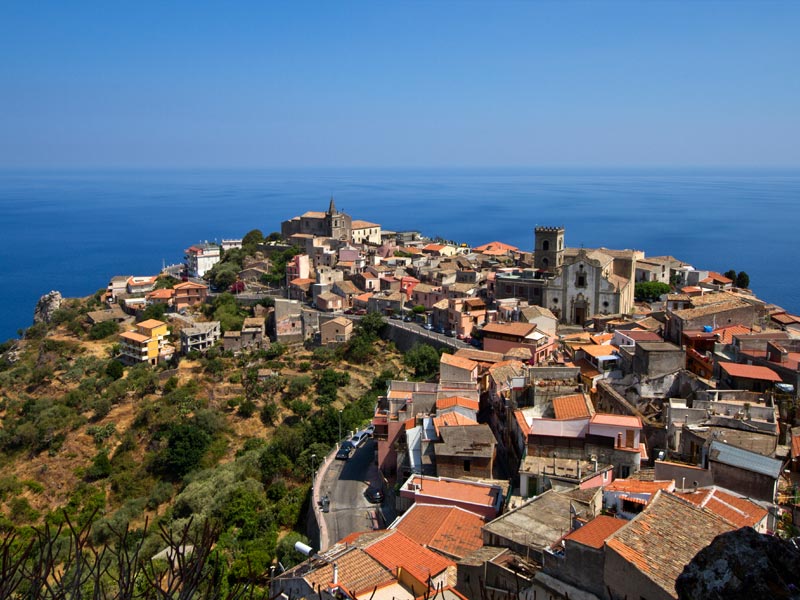
During the summer, bus connections are available from Taormina. Near Capo Sant'Alessio, on the extreme northeast edge of the Taurus Mountains, Forza d'Agrò rises to 420 meters above sea level.
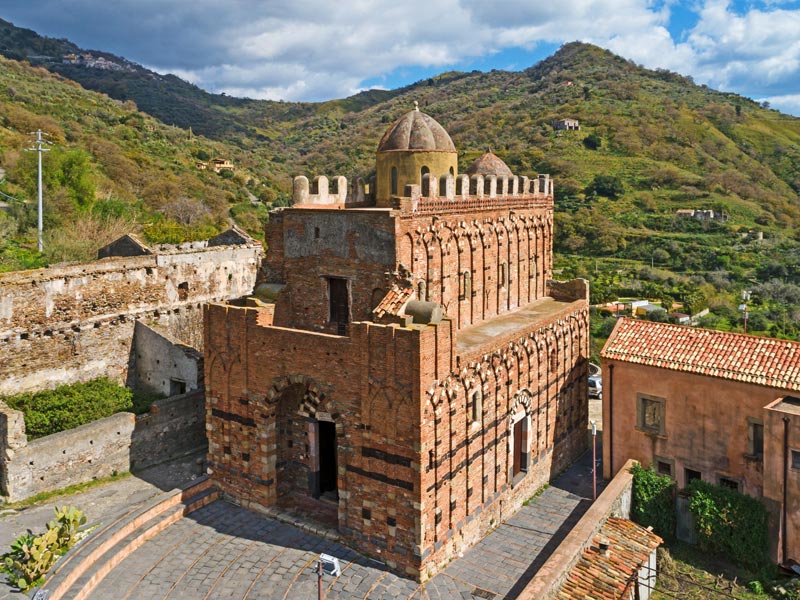
It is not so much interesting for its history as for the numerous reminders of a past full of art and glory, still alive today with magnificent echoes in the surviving monuments: the 18th-century Cathedral, the 1576 Church of the Holy Trinity, the 16th-century Church of San Francesco, and above all the 12th-century Norman Castle, which, according to tradition, was built at the behest of the Great Count Roger.
14 minutes
8,6km
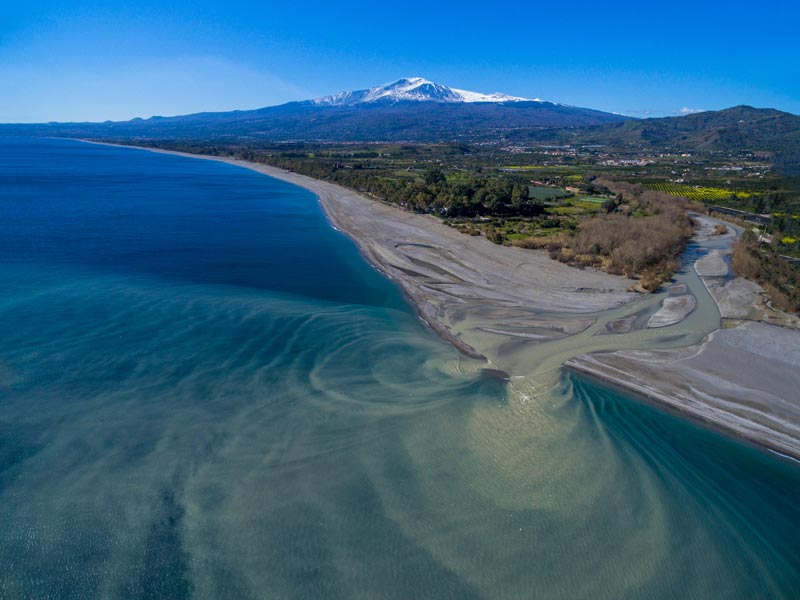
Mouth of the Alcantara River
Reachable only by car via the S.S. 114 towards Catania and then the turnoff for Via Porticato, or on foot from Recanati beach.
The route is interesting both for bird watching and for its vegetation and landscape. You can briefly ascend the river along an easy trail to admire the aquatic plant formations.
54 minutes
35,6km
Castelmola
Reachable by car from the S.P. 10 or by bus with the INTERBUS bus service departing from Taormina.
An ancient medieval village with a unique view above Taormina, it preserves the ruins of the Norman Castle, the Mother Church, and the Porta dei Saraceni with its surrounding walls.
26 minutes
12,2km
Casalvecchio Siculo
Perched halfway up Mount Sant'Elia, 400 meters above sea level, Casalvecchio is about 20 km from Giardini Naxos.
Founded in the Byzantine era by monks from Syria and Egypt, it boasts an impressive architectural heritage, as well as a forestry heritage.
Among its buildings are the 17th-century Mother Church, with its artistic coffered ceiling and corbels and an adjoining Museum of Sacred Objects; the Church of San Nicolò, rich in works of art; the Church of the Annunciation, both from the 16th century; and the 17th-century Church of San Teodoro.
28 minutes
14,7km
Calatabiano
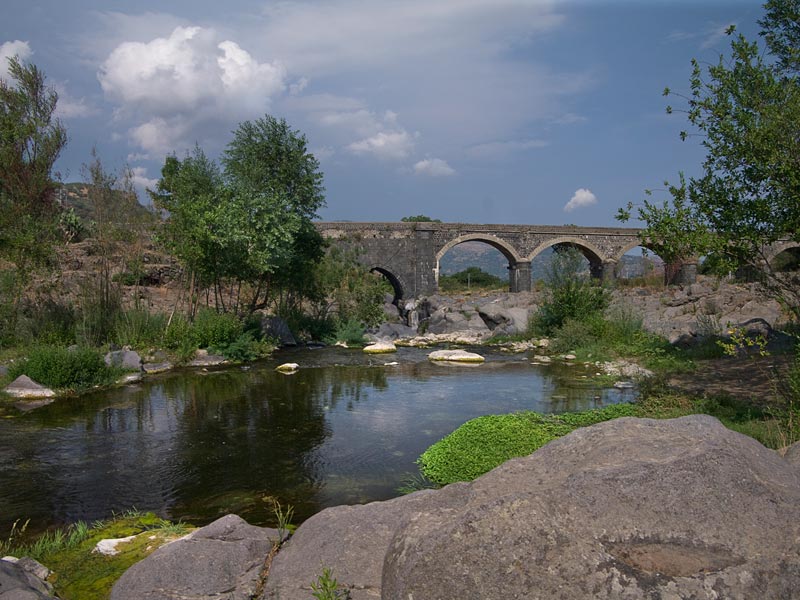
Proceed on State Road 114 towards Catania, approximately 500 meters after the Alkantara Bridge, turn right.
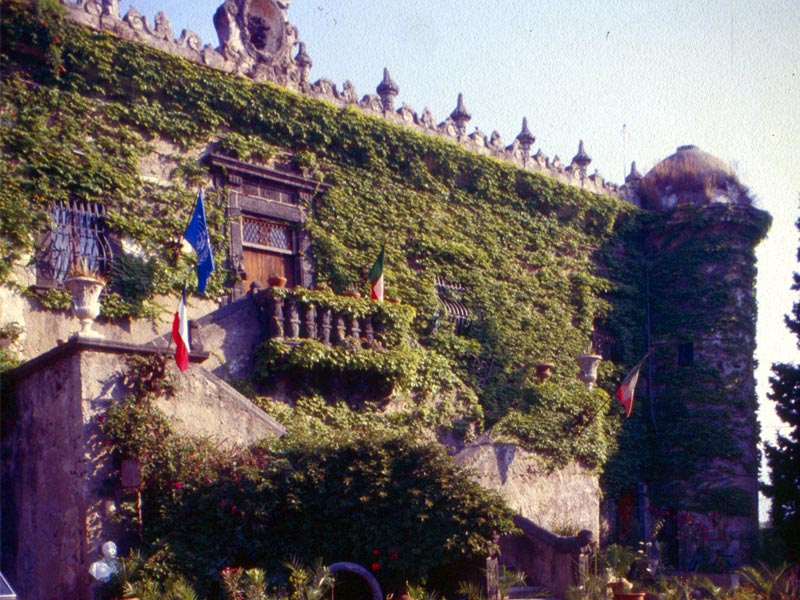
It preserves the ruins of an Arab-Norman castle (9th century) at the top of the hill overlooking the town, the castle that was the summer residence of the Prince of Palagonia (17th century, in the San Marco area), and a precious 16th-century wooden crucifix, of the Antonellian school, housed in the Church of the Annunziata (1740).